Your shopping cart is empty.
16
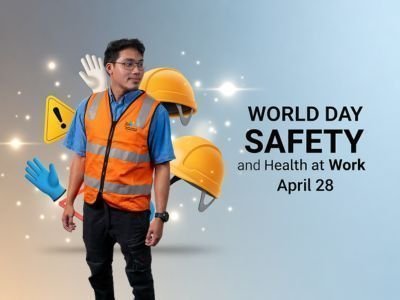
Globally, the scale of the issue remains significant.
According to the International Labour Organization, more than 2.7 million workers die each year from work related injuries and diseases.
In Australia, the numbers are smaller, but the impact is just as real. Safe Work Australia reports hundreds of workplace fatalities each year, alongside tens of thousands of serious injury claims.
These are not just statistics. They signal that safety systems do not always keep pace with how people actually perform work.
This is why initiatives like World Day play a critical role in helping organisations promote safe work practices and prevent physical harm across the workplace.
Artificial intelligence, automation, and digital systems are now embedded in everyday operations.
Research from McKinsey & Company shows that 65% of organisations are using AI within at least one core business function, such as operations, safety monitoring, or supply chain management, reflecting how these technologies are becoming embedded into formal processes, not just individual tools.
Globally, the scale is also increasing. The International Federation of Robotics reports more than 4 million industrial robots are now operating worldwide, particularly in manufacturing and high risk environments.
Across industries, we are seeing:
These changes are transforming the working environment in modern workplaces.
They bring clear benefits. They also introduce new and less visible risks.
For example:
The risk landscape is evolving, and many organisations are still adapting how they design or manage workplace safety systems.
World Day for Safety and Health at Work highlights global shifts in how work is changing.
Those same trends are already visible across Australian industries.
Regulators like WorkSafe and Safe Work Australia are enforcing existing obligations more rigorously.
There is a clear expectation that businesses:
Globally, digital tools enable real time hazard detection.
In Australia, this is translating into:
Organisations must now actively manage their working environment and workplace risks, not just document them.
Safety is no longer limited to physical hazards.
In Australia, this is showing up through:
This reflects a growing recognition that both physical harm and psychological risk must be managed together.
Industries such as manufacturing, construction, infrastructure, and energy are at the centre of this shift.
In Australia, these sectors account for the majority of serious incidents. According to Safe Work Australia, around 60% of workplace fatalities occur in just three industries: construction, agriculture, and transport, postal and warehousing.
These industries are also experiencing rapid change. They:
This combination increases both risk exposure and regulatory expectation.
It reinforces the importance of initiatives such as Workers Memorial Day, which recognises the impact of workplace incidents and reinforces the need to prevent them.
One of the clearest examples of global safety trends impacting Australia is the tightening of Workplace Exposure Limits (WELs).
Traditionally referred to as Workplace Exposure Standards (WES), the terminology is now shifting to Workplace Exposure Limits (WEL), with changes taking effect from December. This reflects a clear move toward international alignment and a higher standard of protection, meaning businesses must ensure their current assessments remain compliant.
In recent updates, 31 workplace exposure limits have been reduced or introduced.
This includes:
These changes reflect a broader shift toward creating a safe and healthy working environment through improved standards and controls.
A lower exposure limit may seem minor.
In practice, it can significantly change your risk profile.
A workplace that was previously compliant may now:
Many organisations get caught out here.
Not because they ignore safety, but because standards evolve.
WEL changes reinforce a broader reality.
Safety is no longer something you achieve once.
It requires:
This shift aligns with global efforts to promote World Day awareness and improve workplace safety outcomes through ongoing action.
As workplace risks evolve, the challenge for many organisations is not recognising hazards.
It is knowing what to do next.
JTA’s Detect. Protect. model provides a clear roadmap to manage workplace risk and create a safe and healthy working environment.
The first step builds an accurate picture of risk.
This includes:
This helps organisations identify risks early and prevent physical harm and long term health impacts.
The second step focuses on action.
This includes:
The goal is not just compliance, but sustained protection of workers.
JTA’s approach moves beyond one off assessments.
It creates a structured pathway for:
World Day for Safety and Health at Work asks a simple question:
Is your workplace safety system aligned with how work is actually performed today?
As risks evolve, maintaining compliance requires more than periodic checks.
It requires a structured approach.
JTA’s Detect. Protect. roadmap helps organisations:
If you are unsure whether your systems reflect current risks and standards, now is the time to review.
Contact JTA on 1800 107 618 to discuss how to strengthen your workplace safety approach.
Get a Quote/Book Online
OR
Call Us on 1300 856 282





Head Office Melboune
139 Ormond Road Elwood, VIC 3184
Mornington Peninsula
20 Lister Avenue,
Sorrento,
VIC 3943
JTA Health, Safety & Noise Specialists acknowledges the Boon Wurrung People of the Kulin Nation as the Traditional Owners and Custodians of the land on which the home of JTA resides. We pay our respects to their Elders past, present and emerging, and acknowledge and uphold their continuing relationship to this land.