
Your shopping cart is empty.
16
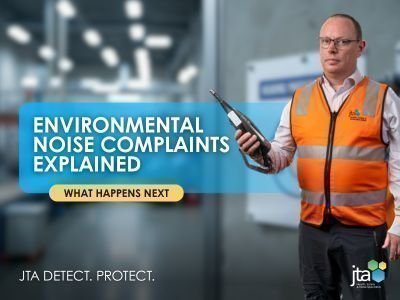
Environmental noise complaints can quickly turn a manageable issue into regulatory scrutiny, operating restrictions, redesign and additional cost.
Across Australia, noise remains one of the most common environmental issues reported to regulators and councils.
EPA Victoria reports that noise complaints increased from 5,404 in 2020–21 to 9,107 in 2024–25, making noise the most reported pollution issue in the state.
In New South Wales, regulators recorded more than 3,200 noise-related complaints and enquiries in a single year, with thousands of environmental incidents reported through the EPA's Environment Line.
The important point for businesses isn't simply that complaints happen. It's that many environmental noise problems can be identified and managed before a neighbour, regulator or council becomes involved.
“Getting acoustic advice early allows you to address potential issues before they become problems. It gives you the opportunity to design for compliance, rather than fix it later.”
— Boaz Leong, Acoustic Consultant, JTA
Most environmental noise complaints start very simply.
A resident, neighbour or nearby business notices a change in noise — often at night, early in the morning or during construction.
They may then:
Once someone makes a complaint, the issue can move from a neighbour concern to a formal regulatory process.
The exact process varies between jurisdictions, but the pathway often follows the same general pattern.
If a regulator decides the complaint warrants investigation, they may:
The assessment doesn't focus only on a single measured noise level. Regulators and acoustic consultants may also consider the source, timing, characteristics of the noise and its impact on nearby sensitive receivers.
A complaint doesn't usually mean a project will immediately shut down or receive a fine.
Instead, the response can escalate as the issue develops.
| Stage | What May Happen | Potential Impact |
|---|---|---|
| Initial complaint | Request for information, investigation or assessment | Additional scrutiny and management time |
| Issue confirmed | Noise controls, operating changes or restrictions on working hours | Operational disruption and additional cost |
| Continued non-compliance | Notices, enforcement action or financial penalties | Greater regulatory, financial and reputational risk |
| Serious or persistent breaches | More significant enforcement or legal action | Major project and business consequences |
Most organisations don't run into problems because noise is impossible to manage.
They run into problems because they consider noise too late.
| If Noise Is Considered Early | If Noise Is Considered Late | Possible Consequence |
|---|---|---|
| Equipment locations can change | Equipment is already installed | Retrofit or relocation |
| Acoustic controls can form part of design | Construction is already underway | Redesign and delays |
| Potential impacts can be modelled | Complaints have already started | Reactive investigation and controls |
| Community impacts can be anticipated | Neighbours are already affected | Reputational and stakeholder issues |
Early acoustic advice gives project teams more options.
An acoustic consultant can help you:
Planning a new project or changing an existing site?
Our guide explains the stages where early acoustic input can reduce the risk of redesign, complaints and project delays.
In Victoria, the General Environmental Duty (GED) requires organisations to minimise risks of harm to human health and the environment so far as reasonably practicable.
In practical terms, businesses should identify environmental risks, assess potential impacts, implement appropriate controls and maintain those controls.
The important point:
You should identify and manage environmental noise risk before a complaint occurs — not only after a regulator becomes involved.
Other Australian states use different legislation and terminology, but organisations across Australia may still face council, planning or environmental requirements relating to noise emissions.
→ Read: What Is General Environmental Duty for Noise Compliance?
Many environmental noise problems come back to three recurring gaps.
| Gap | What Goes Wrong | Better Approach |
|---|---|---|
| 1 | Noise is considered too late | Assess noise during planning and design while changes remain practical. |
| 2 | Baseline conditions are misunderstood | Measure existing background conditions and identify sensitive receivers. |
| 3 | No modelling or forward planning | Predict future noise impacts and test control options before committing to them. |
The right approach depends on whether you're responding to an existing issue, planning a future project or managing construction works.
| JTA Service | When It Can Help | Learn More |
|---|---|---|
| Environmental Noise Assessment | Assess an existing site's noise emissions, investigate complaints, identify sensitive receivers and compare results with relevant requirements. | View service → |
| Noise Modelling | Predict how proposed equipment, facilities or site changes may affect surrounding receivers before construction or installation. | View service → |
| Construction Noise & Vibration | Monitor and manage noise and vibration from demolition, excavation, piling, infrastructure and other construction activities. | View service → |
| Vibration Monitoring | Assess vibration impacts where construction, plant, traffic or industrial activities may affect neighbouring properties or structures. | View service → |
A JTA Environmental Noise Assessment can help determine whether a site is meeting applicable noise requirements and where controls may be needed.
An assessment may include:
For proposed sites or major modifications, noise modelling can also predict the impact at nearby receivers before the project becomes operational.
If you're planning a project:
When Do You Need Acoustic Advice for a Project? →
If you operate in Victoria:
What Is General Environmental Duty for Noise Compliance? →
If you need background on Victoria's EPA noise framework:
New EPA Laws That Affect Environmental Noise Assessments →
If the issue is occupational rather than environmental noise:
Why Workplace Noise Is Back on the Regulator's Radar →
Environmental noise complaints often reveal a problem after the opportunity for simple design changes has passed.
If your project, facility or operations generate noise, the better question isn't:
“Will someone complain?”
It's:
Have we identified and managed the environmental noise risk early enough?
JTA's acoustic consultants can assess existing environmental noise, investigate complaints, predict future impacts and recommend practical controls.
Depending on your project, we can assist with environmental noise assessments, noise modelling, and construction noise and vibration monitoring.
DETECT. PROTECT.
Talk to JTA before noise becomes a project or compliance issue.
1300 856 282
Get a Quote/Book Online
OR
Call Us on 1300 856 282
Explore more from JTA:
References
1. EPA Victoria Annual Report 2024–25
https://www.epa.vic.gov.au/about-epa/publications/annual-report
2. NSW EPA Annual Report 2024–25
https://www.epa.nsw.gov.au/about-us/publications-and-statistics/annual-reports
3. Queensland Department of the Environment, Tourism, Science and Innovation Annual Report 2024–25
https://www.detsi.qld.gov.au/our-department/corporate-docs





Head Office Melboune
139 Ormond Road Elwood, VIC 3184
Mornington Peninsula
20 Lister Avenue,
Sorrento,
VIC 3943
JTA Health, Safety & Noise Specialists acknowledges the Boon Wurrung People of the Kulin Nation as the Traditional Owners and Custodians of the land on which the home of JTA resides. We pay our respects to their Elders past, present and emerging, and acknowledge and uphold their continuing relationship to this land.