Your shopping cart is empty.
16
From 1 December 2026, Australia will introduce a dedicated Workplace Exposure Limit (WEL) for flour dust — a significant change for bakeries, mills and food manufacturing businesses.
Australia's new Workplace Exposure Limits (WELs) will replace the existing Workplace Exposure Standards (WES) from 1 December 2026.
One of the most important changes for food manufacturers is the introduction of a specific occupational exposure limit for flour (cereal) dust.
Flour (cereal) dust: 0.5 mg/m³
8-hour Time-Weighted Average (TWA)
Food manufacturers should use the lead-up to December 2026 to identify where flour becomes airborne, understand who may be exposed and check whether existing controls effectively manage the risk.
Looking for the practical exposure risks?
Our new guide walks through the seven food manufacturing tasks most likely to create airborne flour dust.
Historically, workplaces managed flour dust under broader particulate exposure requirements rather than a dedicated flour dust limit.
The new WEL introduces a specific 0.5 mg/m³ 8-hour TWA for flour (cereal) dust.
This change means bakeries, mills and food processing facilities should reassess tasks that generate airborne flour dust and determine whether their current controls remain effective.
| What Changes? | From 1 December 2026 | What It Means |
|---|---|---|
| Dedicated flour dust WEL | 0.5 mg/m³ over 8 hours | Food manufacturers need to understand actual worker exposure. |
| Exposure assessment | Greater focus on flour-specific exposure | Review tipping, weighing, mixing, coating, transfer and cleaning tasks. |
| Control verification | Controls need to manage exposure effectively | Check extraction, enclosure, work practices and respiratory protection. |
The exposure limit is only part of the story. Businesses also need to understand where workers actually encounter flour dust.
Common exposure points can include:
Want to inspect these tasks in more detail?
The companion guide explains what to look for at each stage of the food manufacturing process.
The flour dust limit forms part of a much broader reform of Australia's airborne contaminant exposure limits.
The changes affect businesses across food manufacturing, transport, construction, mining, agriculture and other industries.
| Airborne Contaminant | Industries Potentially Affected | Where Exposure May Occur |
|---|---|---|
| Flour dust | Food manufacturing, bakeries, mills | Tipping, batching, mixing, coating, transfer and cleaning |
| Diesel particulate matter | Transport, logistics, councils, manufacturing | Diesel vehicles, plant, forklifts and enclosed work areas |
| Wood dust | Timber, furniture and joinery | Cutting, sanding, machining and cleaning |
| Other new airborne contaminants | Manufacturing, laboratories, agriculture and processing | Depends on materials, chemicals and workplace processes |
If you're preparing for the December 2026 changes, these related JTA articles provide the broader context:
→ Workplace Exposure Limits Are Changing
An overview of what the new WEL framework means for Australian workplaces.
→ Industries Most Affected by Australia's 2026 Workplace Exposure Limits
See which industries and workplace activities may face the biggest changes.
→ 31 New Chemicals Added to the Workplace Exposure Limits
Review the newly introduced airborne contaminants and where businesses may encounter them.
→ 7 Flour Dust Risks in Food Manufacturing
A practical guide to identifying flour dust exposure across food production tasks.
Flour dust is more than a housekeeping issue.
Workers who inhale flour dust can experience respiratory irritation and may develop conditions such as occupational asthma.
Food manufacturers should therefore look beyond visible dust. Workers may still inhale airborne flour dust even when they cannot see a dust cloud.
Ask three questions:
1. Where does flour become airborne?
2. Which workers perform or work near those tasks?
3. Do the existing controls effectively reduce exposure?
The most obvious dust source may not always create the greatest worker exposure. Review the entire production process rather than focusing only on the main manufacturing equipment.
→ See the seven food manufacturing tasks that can create flour dust exposure
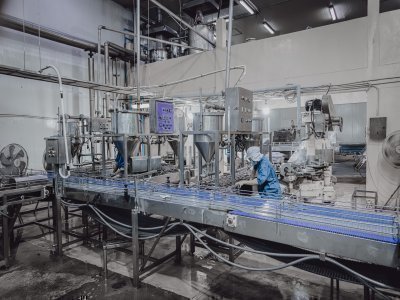
In August 2025, JTA conducted a Flour Dust Exposure Assessment at Patties Foods' Lucknow, Victoria facility.
JTA's occupational hygienists completed personal and static air monitoring, real-time dust mapping and additional airborne contaminant assessments across production areas.
| JTA Assessed | Existing Controls | Opportunity Identified |
|---|---|---|
| Personal and static air monitoring | Local exhaust ventilation | Further improve extraction at flour addition points |
| Real-time dust mapping | High-volume dilution airflow | Continue monitoring and improvement |
| Production-line exposure | Training, cleaning and respirator access | Maintain controls as WEL requirements change |
The assessment showed how proactive monitoring can give businesses evidence about existing controls and identify where further improvements may help.
Food manufacturers do not need to wait until December 2026 to start preparing.
| Step | Action | What to Do |
|---|---|---|
| 1 | Establish baseline exposure | Use workplace air monitoring to understand exposure during production, packaging and cleaning tasks. |
| 2 | Review engineering controls | Check extraction, ventilation, enclosure and transfer systems. |
| 3 | Check respiratory protection | Confirm respirators suit the task and workers complete appropriate fit testing. |
| 4 | Engage an occupational hygienist | Assess exposure, interpret monitoring results and recommend practical controls. |
| 5 | Inform workers | Explain flour dust risks, controls and any changes to workplace procedures. |
If your facility handles flour, powdered ingredients or other airborne contaminants, these JTA services can help you move from identifying the risk to measuring and controlling it.
| Service | How It Helps | Learn More |
|---|---|---|
| Occupational Hygiene | Identify, assess and manage workplace health hazards and airborne exposures. | View service → |
| Air Monitoring | Measure contaminants in workers' breathing zones and determine actual exposure. | View service → |
| Health Risk Assessments | Identify occupational health hazards and prioritise where further assessment may be required. | View service → |
| Respirator Fit Testing | Help ensure tight-fitting respiratory protection fits individual workers correctly. | View service → |
If you work in food manufacturing:
7 Flour Dust Risks in Food Manufacturing →
If you need an overview of the regulatory change:
Workplace Exposure Limits Are Changing →
If you want to know which sectors face the biggest changes:
Industries Most Affected by Australia's 2026 Workplace Exposure Limits →
If you want to see the newly added contaminants:
31 New Chemicals Added to the Workplace Exposure Limits →
Preparing for the new Workplace Exposure Limits doesn't need to start with a complicated compliance exercise.
Start by identifying where flour becomes airborne, determine which workers may be exposed and then verify whether existing controls effectively reduce that exposure.
JTA's occupational hygienists can assess flour dust exposure, identify higher-risk processes and undertake workplace air monitoring to determine whether existing controls effectively protect workers.
DETECT. PROTECT.
Talk to JTA about flour dust exposure monitoring and WEL readiness.
1300 856 282
Get a Quote/Book Online
OR
Call Us on 1300 856 282
References
1 https://www.pnas.org/content/118/17/e2018995118





Head Office Melboune
139 Ormond Road Elwood, VIC 3184
Mornington Peninsula
20 Lister Avenue,
Sorrento,
VIC 3943
JTA Health, Safety & Noise Specialists acknowledges the Boon Wurrung People of the Kulin Nation as the Traditional Owners and Custodians of the land on which the home of JTA resides. We pay our respects to their Elders past, present and emerging, and acknowledge and uphold their continuing relationship to this land.