Your shopping cart is empty.

Detect workplace hazards. Protect your people.
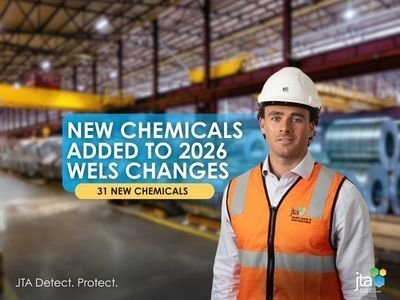
Manufacturing is one of Australia's most diverse industries and one of the sectors expected to be most affected by the updated Workplace Exposure Limits (WELs) commencing on 1 December 2026.
Start dates differ by state. Most new limits apply from 1 December 2026, but Victoria and Queensland have given 15 substances, including styrene, perchloroethylene, manganese, nickel, softwood dust and diesel particulate matter, a transition to 1 December 2029. NSW has an interim diesel limit until 30 June 2028. See the table below and our state-by-state dates.
From fabrication workshops and engineering businesses to plastics manufacturing, timber processing and industrial production facilities, manufacturers routinely generate airborne contaminants through everyday work activities. Welding, grinding, machining, spray painting, powder coating, forklift operations and chemical handling all have the potential to expose workers to hazardous dusts, fumes, vapours and gases.

Find out what changes are relevant to your industry.
If your business undertakes any of the following activities, the revised Workplace Exposure Limits may affect your workplace.

Welding & Fabrication
Grinding & Machining
Spray Painting

Powder Coating

Chemical Manufacturing

Plastics Manufacturing

Timber Processing

Diesel Forklifts

Warehousing & Distribution
Common Workplace Hazards: Welding fumes, manganese, chromium, nickel
Primary Workplace Exposure Considerations: Welding fume exposure, manganese, metal fumes
Recommended JTA Services: Workplace Exposure Monitoring, Occupational Hygiene Assessment
Common Workplace Hazards: Metal dust, respirable particulates
Primary Workplace Exposure Considerations: Airborne metal dust and respirable dust
Recommended JTA Services: Dust Monitoring, Occupational Hygiene Assessment
Common Workplace Hazards: Organic solvents, isocyanates, paint mists
Primary Workplace Exposure Considerations: Solvent vapours and chemical exposure
Recommended JTA Services: Workplace Exposure Monitoring, Air Monitoring
Common Workplace Hazards: Powder dusts, curing fumes
Primary Workplace Exposure Considerations: Airborne particulates and chemical exposure
Recommended JTA Services: Occupational Hygiene Assessment
Common Workplace Hazards: Hazardous chemicals and vapours
Primary Workplace Exposure Considerations: Chemical exposure limits
Recommended JTA Services: Workplace Exposure Monitoring
Common Workplace Hazards: Polymer fumes and VOCs
Primary Workplace Exposure Considerations: Thermal decomposition products
Recommended JTA Services: Air Monitoring
Common Workplace Hazards: Wood dust
Primary Workplace Exposure Considerations: Hardwood and softwood dust
Recommended JTA Services: Dust Monitoring
Common Workplace Hazards: Diesel exhaust emissions
Primary Workplace Exposure Considerations: Diesel particulate matter
Recommended JTA Services: Workplace Exposure Monitoring
Common Workplace Hazards: Diesel exhaust emissions
Primary Workplace Exposure Considerations: Diesel particulate matter
Recommended JTA Services: Workplace Exposure Monitoring
Common Workplace Hazards: Welding fumes, solvents and degreasers
Primary Workplace Exposure Considerations: Multiple airborne contaminants
Recommended JTA Services: Occupational Hygiene Assessment
Common Workplace Hazards: Hazardous noise
Primary Workplace Exposure Considerations: Worker hearing protection
Recommended JTA Services: Occupational Noise Assessment & Audiometric Testing
The new national limits are the same everywhere. When they apply depends on the state.
| Substance | Current standard | New national limit | NSW | Victoria and Queensland |
|---|---|---|---|---|
| Styrene, monomer | 50 ppm | 20 ppm | From 1 December 2026 | Current standard until 1 December 2029 |
| Perchloroethylene | 50 ppm | 20 ppm | From 1 December 2026 | Current standard until 1 December 2029 |
| Manganese fume, dust and compounds | 1 mg/m³ | 0.1 mg/m³ (inhalable), 0.02 mg/m³ (respirable) | From 1 December 2026 | Current standard until 1 December 2029 |
| Nickel, metal and insoluble compounds | 1 mg/m³ (metal, powder, sulphide roasting) | 0.1 mg/m³ | From 1 December 2026 | Current standard until 1 December 2029 |
| Wood dust (softwood) | 5 mg/m³ (10 mg/m³ STEL) | 2 mg/m³ | From 1 December 2026 | Current standard until 1 December 2029 |
| Diesel particulate matter (as respirable elemental carbon) | No specific limit | 0.01 mg/m³ | 0.05 mg/m³ until 30 June 2028, then 0.01 | 0.1 mg/m³ until 1 December 2029, then 0.01 |
Values are 8-hour time-weighted averages unless noted. South Australia has delayed flour dust, grain dust, methyl bromide and phosphine to no earlier than July 2028. Western Australia has delayed phosphine to 1 December 2029 and put diesel changes on hold. Other states and territories follow the national dates. Checked 12 November 2026. See Workplace Exposure Limits 2026: Dates by State and Territory for every substance.
Consultant Video Library
Manufacturing Knowledge Centre
Workplace Exposure Limit guides
Detect workplace hazards. Protect your people.

Identify workplace hazards through Occupational Hygiene Assessments, workplace inspections and hazard identification.

Measure worker exposure using Workplace Exposure Monitoring and compare results against Australia's Workplace Exposure Limits.

Recommend practical engineering controls, administrative controls, improved work practices and respiratory protective equipment.

Support ongoing compliance through repeat monitoring, health surveillance and continuous improvement.


Join JTA's Occupational Hygienists for a practical breakfast seminar covering:
Most new limits apply from 1 December 2026. In Victoria and Queensland, 15 substances relevant to manufacturing, including styrene, perchloroethylene, manganese, nickel and softwood dust, keep their current standards until 1 December 2029. NSW has interim limits for phosphine and diesel until 30 June 2028. See Dates by State and Territory and the guides for Victoria, NSW and Queensland.
Not necessarily.
However, if workers may be exposed to hazardous airborne contaminants, Workplace Exposure Monitoring provides valuable information about worker exposure and whether existing controls continue protecting employees.
Workplace Exposure Monitoring measures the concentration of airborne contaminants within a worker's breathing zone while normal work activities are being performed.
Monitoring results are compared against Australia's Workplace Exposure Limits to determine whether workers are adequately protected.
Monitoring frequency depends on workplace hazards, production processes, previous monitoring results and any changes to workplace activities.
Periodic monitoring is often recommended as part of an ongoing Occupational Hygiene program.
JTA provides:




Head Office Melboune
139 Ormond Road Elwood, VIC 3184
Mornington Peninsula
20 Lister Avenue,
Sorrento,
VIC 3943
JTA Health, Safety & Noise Specialists acknowledges the Boon Wurrung People of the Kulin Nation as the Traditional Owners and Custodians of the land on which the home of JTA resides. We pay our respects to their Elders past, present and emerging, and acknowledge and uphold their continuing relationship to this land.