Your shopping cart is empty.
16
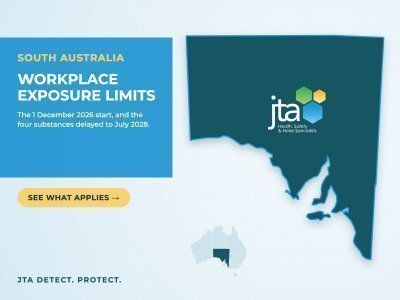
South Australia adopts Australia's new Workplace Exposure Limits (WELs) on 1 December 2026, with one exception: four substances linked to grain handling, fumigation and flour. The new limits for phosphine, grain dust, flour dust and methyl bromide have been delayed until July 2028 at the earliest.
South Australia at a glance
Status at 26 November 2026: SafeWork SA has announced the delays, but the amending regulations hadn't been published on the South Australian legislation register when we checked. SafeWork SA also hasn't said what applies to the four delayed substances in the meantime. We'll update this article when it does.
These four substances won't move to the national WEL on 1 December 2026 in South Australia:
| Substance | Current standard (WES) | New limit (WEL) | When it applies in SA |
|---|---|---|---|
| Phosphine | 0.3 ppm TWA, 1 ppm STEL | 0.05 ppm TWA, 0.15 ppm peak | July 2028 |
| Grain dust (oats, wheat, barley) | 4 mg/m³ TWA | 1.5 mg/m³ TWA | No earlier than July 2028 |
| Flour (cereal) dust | No standard | 0.5 mg/m³ TWA | No earlier than July 2028 |
| Methyl bromide | 5 ppm TWA | 1 ppm TWA | No earlier than July 2028 |
Current values come from Safe Work Australia's WES list and new values from the national WEL list. SafeWork SA hasn't yet said what applies to these substances between 1 December 2026 and July 2028, so the current standards are shown for reference only.
The South Australian Government made two announcements after consulting the grain industry:
Both delays are designed to avoid disrupting the next two grain harvests and to allow more consultation. SafeWork SA says it will work with industry on guidance for other WELs, including grain dust.
Every other substance moves to the national WEL list on 1 December 2026. That includes:
SafeWork SA lists only phosphine, flour dust, grain dust and methyl bromide as having special arrangements. That means the new limit for diesel particulate matter, 0.01 mg/m³ (as respirable elemental carbon), applies in South Australia from 1 December 2026.
That's stricter and sooner than in other large states. NSW has an interim limit of 0.05 mg/m³ until 30 June 2028, Victoria and Queensland keep 0.1 mg/m³ until 1 December 2029, and Western Australia has put its diesel change on hold. If you run diesel forklifts, trucks or plant in enclosed or semi-enclosed areas, check your exposure now. See Diesel Exhaust Has a New Workplace Exposure Limit in Australia.
No. The delay gives South Australian businesses time to prepare for much lower limits, not permission to wait. Your duty to eliminate or minimise exposure so far as is reasonably practicable applies now, whether or not a substance has a number attached.
Three reasons to start early:
For more on flour dust, see Flour Dust Now Has a Legal Limit for the First Time in Australia.
| Substance | South Australia | NSW | Victoria and Queensland | Western Australia |
|---|---|---|---|---|
| Phosphine | New limit (0.05 ppm) from July 2028 | 0.3 ppm until 30 Jun 2028, then 0.05 ppm | 0.3 ppm until 1 Dec 2029, then 0.05 ppm | New limit deferred to 1 Dec 2029 |
| Grain dust | 1.5 mg/m³ no earlier than July 2028 | 1.5 mg/m³ from 1 Dec 2026 | 4 mg/m³ until 1 Dec 2029, then 1.5 mg/m³ | 1.5 mg/m³ from 1 Dec 2026 |
| Flour dust | 0.5 mg/m³ no earlier than July 2028 | 0.5 mg/m³ from 1 Dec 2026 | No limit until 1 Dec 2029, then 0.5 mg/m³ | 0.5 mg/m³ from 1 Dec 2026 |
| Methyl bromide | 1 ppm no earlier than July 2028 | 1 ppm from 1 Dec 2026 | 5 ppm until 1 Dec 2029, then 1 ppm | 1 ppm from 1 Dec 2026 |
| Diesel particulate matter | 0.01 mg/m³ from 1 Dec 2026 | 0.05 mg/m³ until 30 Jun 2028, then 0.01 mg/m³ | 0.1 mg/m³ until 1 Dec 2029, then 0.01 mg/m³ (Victorian underground mining stays at 0.1) | Change on hold pending a regulatory impact assessment |
For every state and territory, see Workplace Exposure Limits 2026: Dates by State and Territory. Our state guides cover NSW, Victoria, Queensland and Western Australia in more detail.
| Step | Action | What to Do |
|---|---|---|
| 1 | Sort your substances into two groups | Those moving to the WEL on 1 December 2026, and the four delayed until July 2028 or later. |
| 2 | Act on the 2026 group first | Compare exposure with the new limits, including diesel, and close any gaps now. |
| 3 | Measure the delayed group now | Baseline monitoring shows how far you are from the new limits and how much work is needed before 2028. |
| 4 | Plan and budget controls | Use the delay to design and fund engineering controls such as extraction, enclosure, ventilation and safer fumigation practices. |
| 5 | Review health monitoring | Check arrangements still suit your substances and exposures. |
| 6 | Keep records | Document monitoring, controls and decisions so you can show your reasoning. |
Not sure where to start? Our free online screener walks you through the substances and tasks at your site.
Check which WEL changes affect you →
| Service | How It Helps | Learn More |
|---|---|---|
| Occupational Hygiene | Identify, assess and manage airborne contaminants against the limits that apply at each site. | View service → |
| Air Monitoring | Measure contaminants in workers' breathing zones so you can compare exposure with the limit. | View service → |
| Health Risk Assessments | Prioritise which substances and tasks need attention first. | View service → |
| Respirator Fit Testing | Make sure tight-fitting respirators protect the workers who rely on them. | View service → |
JTA has an office in Adelaide. Our occupational hygienists can review your substances against the limits that apply in South Australia, carry out personal air monitoring and recommend practical controls before the dates that matter to you.
DETECT. PROTECT.
Talk to JTA about a WEL gap assessment.
1300 856 282
More WEL guidance: Workplace Exposure Limits Resource Centre · Workplace Exposure Limits Are Changing · The 33 Carcinogens With No Exposure Limit
Checked on 26 November 2026.
Get a Quote/Book Online
OR
Call Us on 1300 856 282





Head Office Melboune
139 Ormond Road Elwood, VIC 3184
Mornington Peninsula
20 Lister Avenue,
Sorrento,
VIC 3943
JTA Health, Safety & Noise Specialists acknowledges the Boon Wurrung People of the Kulin Nation as the Traditional Owners and Custodians of the land on which the home of JTA resides. We pay our respects to their Elders past, present and emerging, and acknowledge and uphold their continuing relationship to this land.